
Command guide at a glance
- Primary task
- Packet Tracer Commands Guide
- Latest release check
- Packet Tracer 9.0.0 — Cisco announcement, July 14, 2026
- Best first command
- show ip interface brief
- Safe habit
- Verify before and after every change
Open the device CLI
Select a router or switch, open its CLI tab, press Enter when the console is ready, and read the prompt before typing. PCs use Desktop > Command Prompt for ping and ipconfig; network devices use the IOS CLI.
Understand IOS prompts
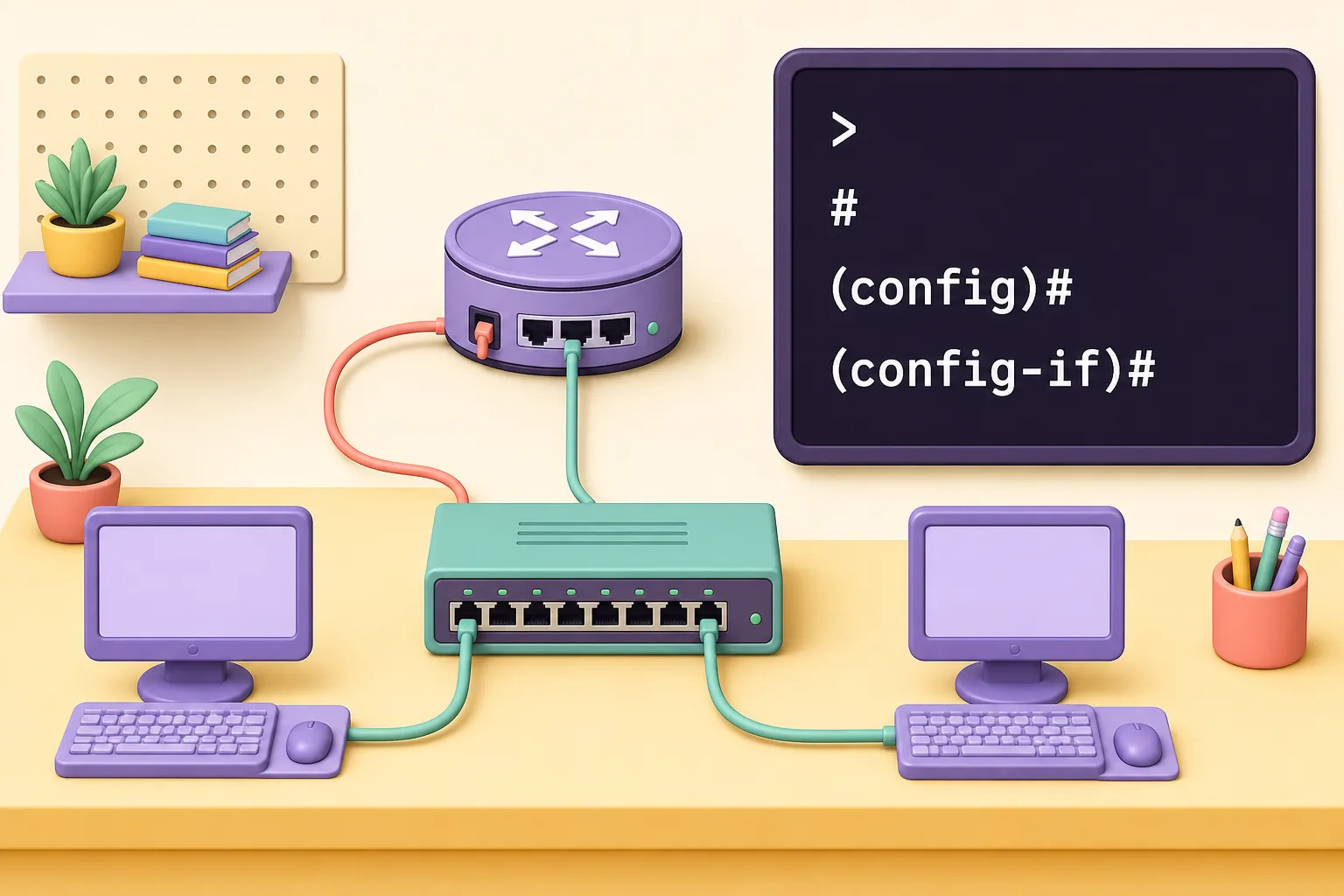
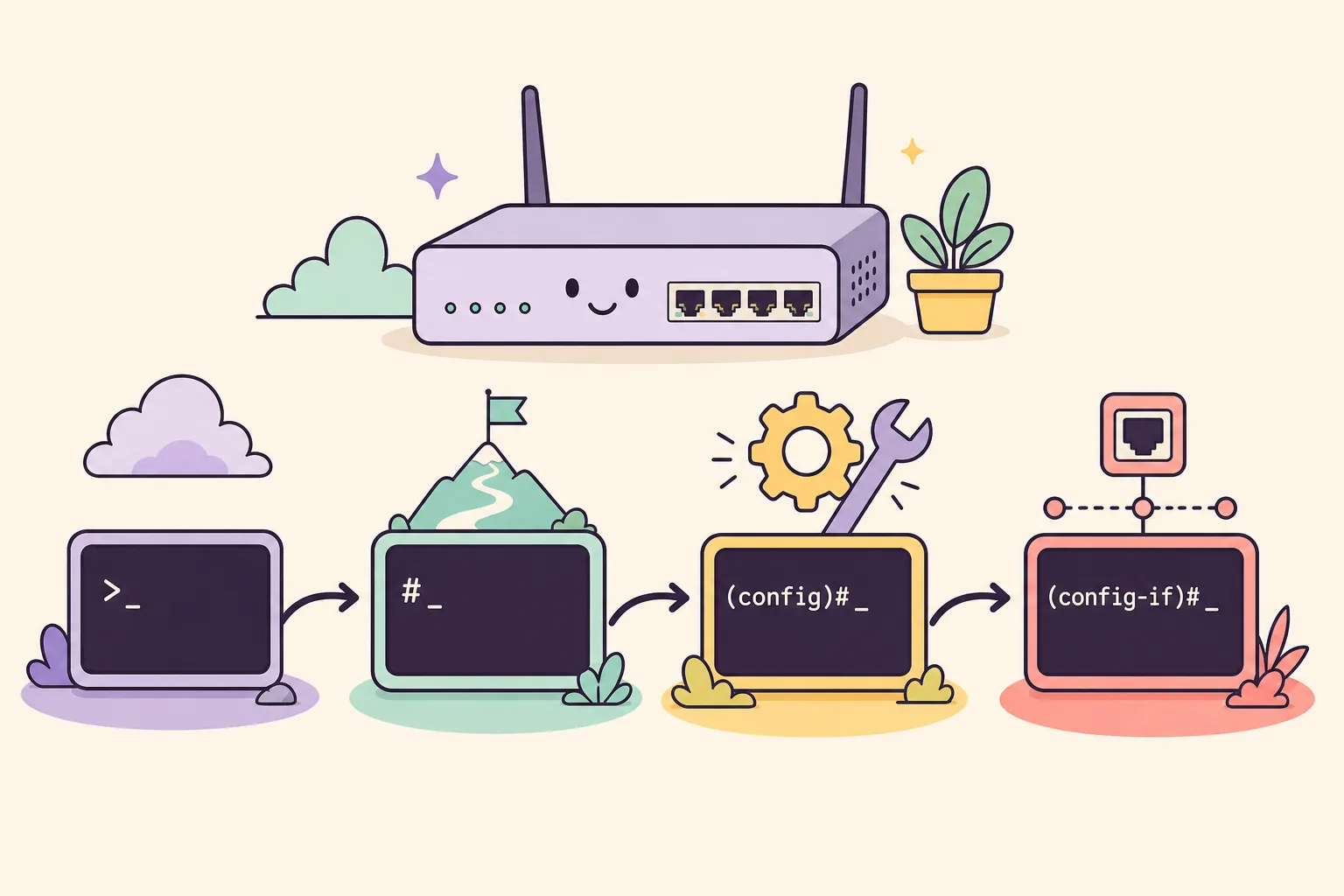
The prompt tells you what commands are valid. User EXEC ends with >. Enter enable for privileged EXEC #, configure terminal for global configuration (config)#, and interface gigabitEthernet 0/0 for interface configuration (config-if)#. Use exit to move back one level and end to return to privileged EXEC.
Configure an interface
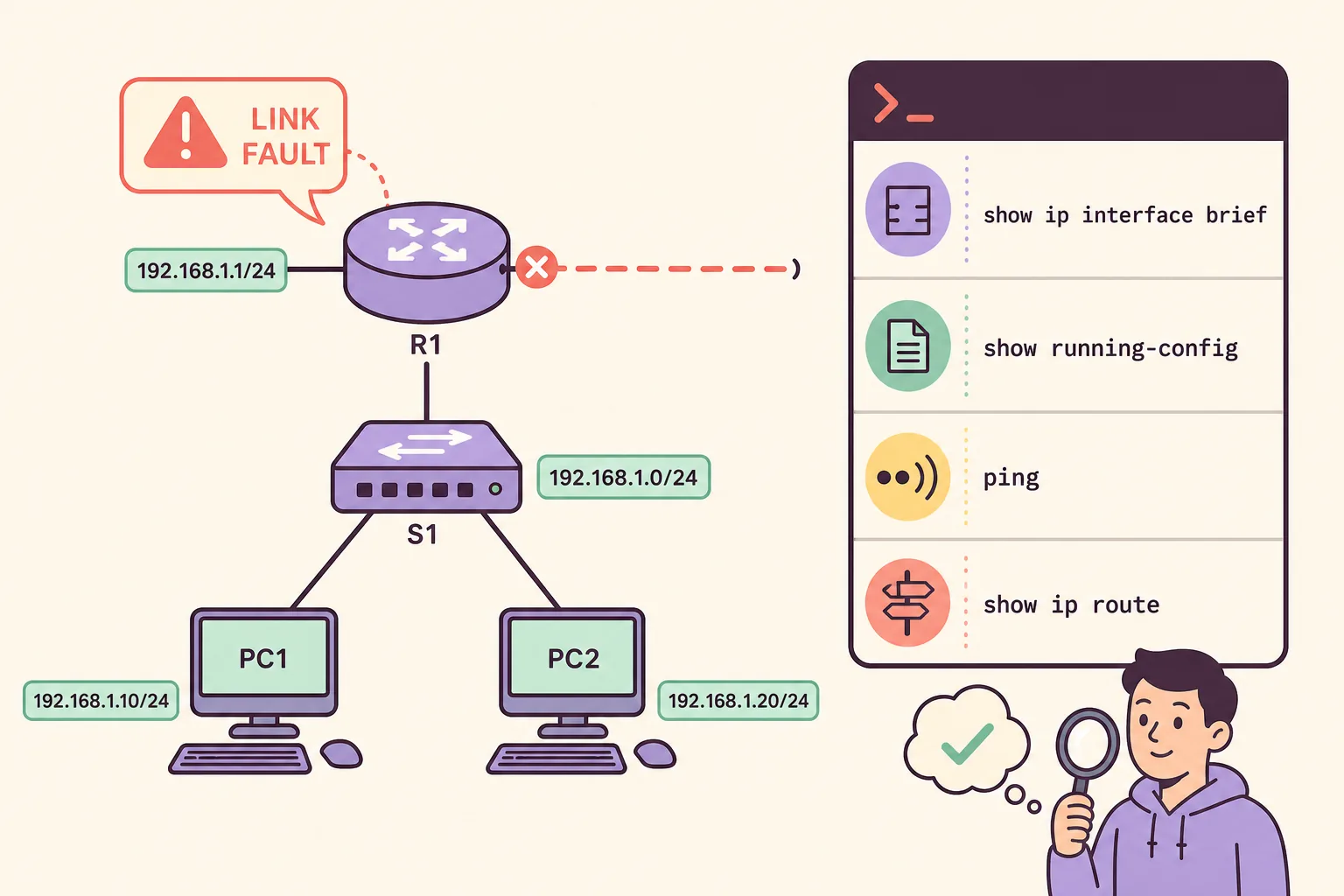
Start with show ip interface brief, show running-config, show ip route, show vlan brief, ping, traceroute, enable, configure terminal, interface, ip address, no shutdown, copy running-config startup-config, and ?. Verification commands should come before configuration changes.
| Command | Purpose | Mode |
|---|---|---|
| show ip interface brief | Interface status and addresses | # |
| show running-config | Current configuration | # |
| show ip route | Routing table | # |
| configure terminal | Enter global configuration | # |
| no shutdown | Enable an interface | (config-if)# |
| ping 192.168.1.1 | Test reachability | > or # |
Verify the network
Inspect the current state, enter configuration mode, change one item, exit, verify, and save only after the result is correct. For an interface, set the address and mask, run no shutdown, then verify both Status and Protocol with show ip interface brief.
Troubleshoot in order
A caret under a command usually marks the first unrecognized character. Check the current prompt, spelling, abbreviation ambiguity, interface name, and Packet Tracer device support. For failed pings, check cables and port lights, IP address and mask, interface state, default gateway, route table, VLAN membership, and ACLs in that order.
Practice workflow
Use ? for context help, Tab for completion, and the up arrow for history. Build a two-router lab, configure one link at a time, record expected output, and compare it with show commands. The goal is to recognize state and choose the next test, not to memorize a giant cheat sheet.
Packet Tracer command FAQ
Where is the CLI in Packet Tracer?
Select a router or switch, open its CLI tab, press Enter when the console is ready, and read the prompt before typing. PCs use Desktop > Command Prompt for ping and ipconfig; network devices use the IOS CLI.
Which commands should a beginner learn first?
Begin with enable, configure terminal, interface, ip address, no shutdown, show ip interface brief, show running-config, show ip route, ping, and copy running-config startup-config.
Why does a command return invalid input?
A caret under a command usually marks the first unrecognized character. Check the current prompt, spelling, abbreviation ambiguity, interface name, and Packet Tracer device support. For failed pings, check cables and port lights, IP address and mask, interface state, default gateway, route table, VLAN membership, and ACLs in that order.